

Conservation experts are calling for urgent measures to control and eradicate exotic species of crayfish to ensure the preservation of native species and aquatic ecosystems



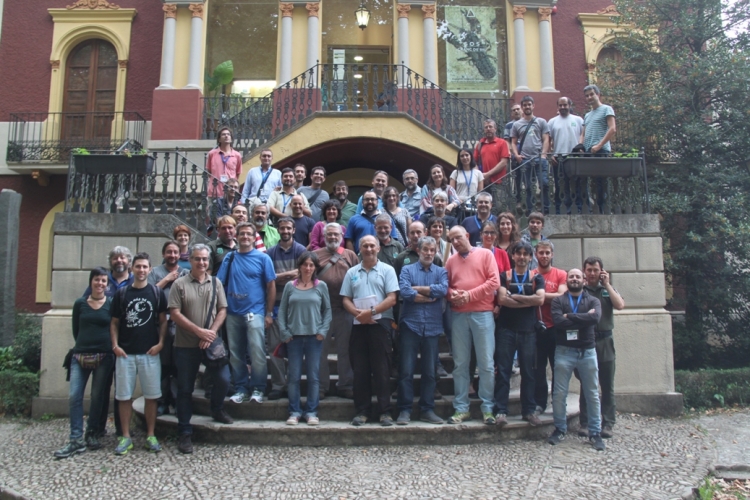
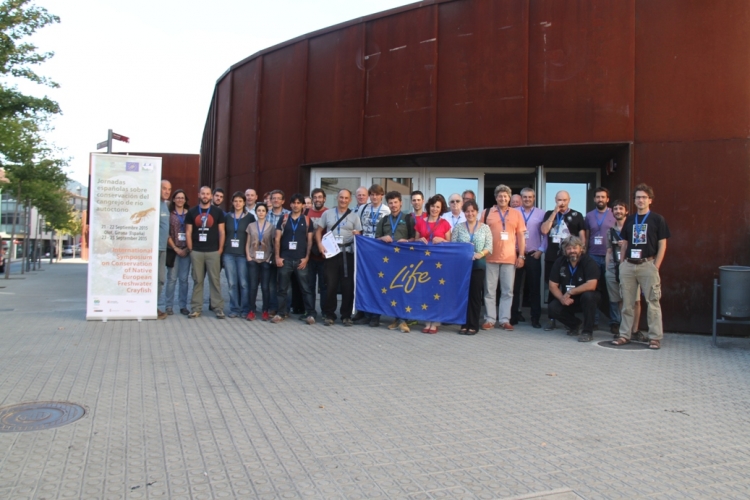
► New genetic studies strengthen the theory that White-clawed Crayfish (Austrapotamobius pallipes) is native to the Iberian Peninsula. ► In the framework of the Conference and Symposium held in Olot (Girona) speculation about its origin has been denied.
The Scientific Committee and the Working Group of the International Conference on Conservation and Spanish Crayfish held in Olot (Girona) http://crayfishsymposiumlifepotamofauna.org, under the organization of the Consorci de l’Estany and the Government of Catalonia and the participation of the Consejo Superior de Investigaciones Científicas (CSIC) within the project LIFE Potamo Fauna http://www.lifepotamofauna.org highlights in their conclusions in light of genetic research, ecological and historical existing the White-clawed Crayfish (Austropotamobius pallipes) is a species native to the Iberian Peninsula, and is seriously threatened throughout its distribution and particularly in this region, thus denying recent speculation about its origin.
The Conference, which met from 21 to 25 September in aquatic wildlife specialists from different regions as national and international scientific presence of the Ministry of Agriculture, Food and Environment (MAGRAMA) served to announce furthermore, important discoveries. These include genetic studies of the Iberian populations, by the Department of Genetics at the Universidad Complutense in line with previous studies of the National Museum of Natural Sciences-CSIC (Pedraza-Lara et al., 2010), which reveal the existence of clear structures and population differences and conservation units that will facilitate the orientation of breeding centers, actions, plans for conservation and management measures.
Currently only those regions that have taken measures have managed to maintain the species, while inaction is leading to its decline.
The crayfish plague still active
The factors that influence the regression of crayfish have also been identified. Thus, new techniques for identification and genotyping of crayfish plague developed by the Department of Mycology of the Royal Botanical Gardens CSIC, have documented that te crayfish plague is still active as a result of invasive species such as Americans crayfish species like Pacifastacus leniusculus, Procambarus clarkii and the recently found Orconectes limosus, which are the focus of chronic disease.
The constant spread of these invasive species is causing a rapid loss of habitat, already subject to alteration by human activities. Therefore it is urgent for the authorities, the application of methods of control and / or eradicate those alien invasive species already used in other European countries such as Italy, Britain, Norway and Sweden. These measures should take particular account of the actions of prevention, early detection and action.
In relation with that, the control of invasive species and the use of fishing crayfish for this purpose presented in regions such as Castilla-La Mancha and Navarra, and European countries such as Italy, Sweden and Finland , show that this measure not only reduces their populations but that increases and enhances their dispersion.
The Scientific Committee of the Conference and Symposium makes the warning that this measure represents a contradiction with the EU regulatory framework for its relationship with the uncontrolled spread of invasive alien species.
See the conclusions of the document the link:
http://crayfishsymposiumlifepotamofauna.org/index.php/jornadas/documentacion-y-descargas