

The Consorci del Ter creates small wetlands at the Ter river edge through Flaçà to recover populations of European Pond Turtle and other reptiles and amphibians


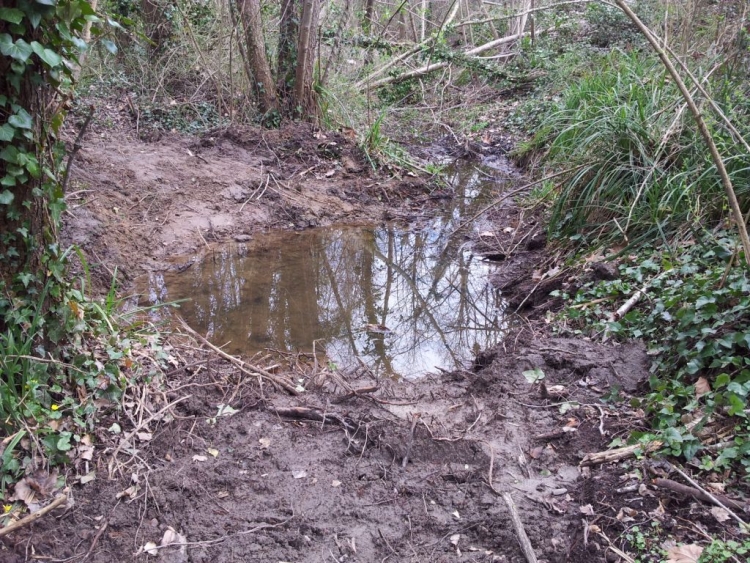
The action is part of the project co-financed by the European Commission LIFE Potamo Fauna
During the present winter time, the LIFE Potamo Fauna project "Conservation of river fauna of Community interest in the Natura 2000 network sites of the Ter, fluvià and Muga river basins" will be create in Flaçà 12 small ponds, downstream of the city of Girona, in order to constitute a suitable habitat for amphibians and reptiles. The activities run from Consorci del Ter and will take place in the Natura 2000 area of Lower Ter, namely the Site of Community Importance "Riparian habitats of the Lower Ter (ES5120011)." The Governing Council of the Consorci del Ter that took place on December the 3rd awarded the work to the company Germans Brunsó SL.
The aim of that action is that these small ponds will help the recovery stocks of European Pond Turtle (Emys orbicularis) and the improvement of the populations of other species of herpetofauna of European interest such as the Mediterranean Turtles (Mauremys leprosa), the Marbled Newt (Triturus marmoratus), the Common Midwife Toad (Alytes obstetricans), the Western Spadefoot Toad (Pelobates cultripes), the Natterjack Toad (Bufo calamita) and the Mediterranean Tree Frog (Hyla meridionalis). In the case of the European Pond Turtle is expected to be release in 2017 a minimum of 150 individuals. In 2015 60 turtles have already been released. During the last winter, under the same project 12 Mediterranean temporary ponds have already been created in the municipalities of Anglès, Bescanó and Sant Gregori upstream the city of Girona. All the ponds are smaller than 50 square meters and they are shallow, less than a meter.
The main cause of decline and fragmentation of populations of these species is due to the disappearance of this type of habitat in Mediterranean temporary ponds, the progressive consolidation into a single river channel of the main river Ter, and the increase of mostly running water habitats. For this reason it is considered essential to the recovery of small temporary flood zones associated with fluvial dynamics, but independent of the ordinary channel (low water). The temporary ponds are semi aquatic habitats characterized by alternating dry and wet periods.
It’s important to note that during the course of the River Ter, there were formerly numerous wetland areas consisting of variable extension widespread flooding in times of flooding, as well as ponds -temporary or permanent- often associated with old oxbows. As the river has lost its natural fluvial dynamics, due to hydraulic management, especially by large dams, and also the result of the progressive reduction of discharges for major detraction and consumption water, the marsh areas have disappeared gradually. The river runs with one single arm and makes impossible the natural recovery of old courses and oxbows, and the formation of new ponds, as well as the renewal of riparian forest.
For this reason, regressive trends have been observed for many species characteristic of the river environment at all stages of Ter. The causes of this decline are manifold, from the persecution, exploitation (hunting and fishing) or direct collection, and also the introduction of invasive animal species, through the decline and degradation of their habitats.